What is SAFe? A Complete Guide to the Scaled Agile Framework
John
IT Consulting & Agile Transformation Expert · Projah
The Scaled Agile Framework (SAFe) is the world's leading framework for enterprise agility. Discover what SAFe is, why organizations adopt it, and how it transforms large-scale software delivery.
- 1.Why Organizations Need SAFe
- 2.The Four Levels of SAFe
- 3.Key SAFe Roles
- 4.Programme Increment (PI) Planning
- 5.SAFe Certifications Available
- 6.Is SAFe Right for Your Organisation?
- Alignment across all levels of the organization, from team to portfolio
- Built-in quality practices that prevent technical debt from accumulating
- Transparency through shared visibility into plans, progress, and problems
- Programme Execution via the Agile Release Train (ART) construct
- Release Train Engineer (RTE) is the chief Scrum Master for the ART
- Product Management owns the Programme Backlog and Vision
- System Architect/Engineer defines technical architecture for the ART
- Business Owners are key stakeholders with business accountability
- Scrum Masters facilitate Scrum teams within the ART
- Review and discuss the Programme Vision and Roadmap
- Identify dependencies and risks across teams
- Create team PI Objectives and committed PI Plans
- Build confidence and commitment through collaborative planning
- SAFe Agilist (SA) is a foundation-level certificate
- SAFe Practitioner (SP) is for team-level practitioners
- SAFe Scrum Master (SSM) is for Agile Team Coaches
- SAFe Advanced Scrum Master (SASM) covers advanced coaching skills
- SAFe Release Train Engineer (RTE) is for RTE role holders
- SAFe Product Owner/Manager (POPM) is for product roles
- SAFe for Architects (ARCH) is for Agile architects
- SAFe Program Consultant (SPC) is for transformation leaders
- You have 50+ practitioners working on a single product or solution
- Multiple teams need to coordinate their work closely
- Your organisation struggles with alignment between strategy and execution
- You need predictable delivery cadences and improved time-to-market
The Scaled Agile Framework (SAFe) is a knowledge base of integrated principles, practices, and competencies for Lean-Agile enterprises. It provides a structured approach for scaling Agile practices across large organizations with multiple teams working on complex solutions.
Why Organizations Need SAFe
Traditional Agile frameworks like Scrum and Kanban work exceptionally well for small, co-located teams. However, when organizations grow to dozens or hundreds of teams working on interconnected products, coordination challenges emerge that single-team frameworks cannot address.
SAFe provides:
The Four Levels of SAFe
SAFe is organized across four configurations:
1. Essential SAFe is the heart of the framework, featuring the Team and Programme levels with the Agile Release Train at its core.
2. Large Solution SAFe is for building large and complex solutions requiring multiple ARTs and suppliers.
3. Portfolio SAFe adds portfolio strategy, Lean budgeting, and enterprise architecture.
4. Full SAFe is the complete configuration combining all four levels.
Key SAFe Roles
Programme Increment (PI) Planning
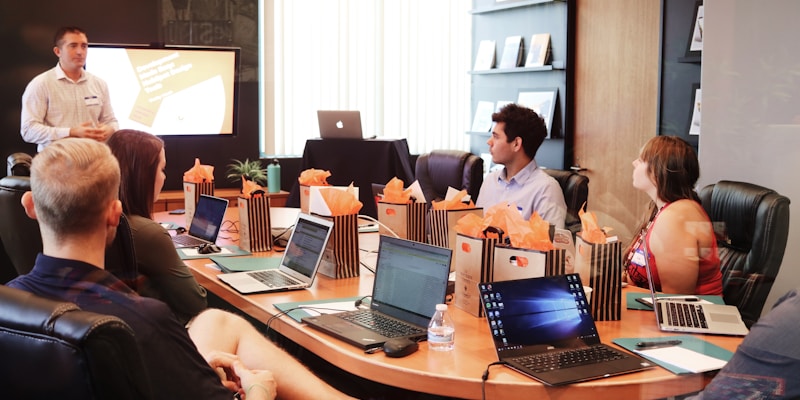
The centrepiece of SAFe execution is PI Planning, a cadence-based, face-to-face event that aligns all teams on the ART to a shared mission and vision. Held every 8 to 12 weeks, PI Planning brings together all team members, stakeholders, and leadership to:
SAFe Certifications Available
SAFe offers a comprehensive certification pathway:
Is SAFe Right for Your Organisation?
SAFe is most valuable when:
If your organisation faces these challenges, SAFe implementation could deliver significant improvements in delivery speed, quality, and stakeholder satisfaction.
Need Expert Guidance?
Our consultants have 20+ years of hands-on experience delivering the outcomes described in this article. Let's talk.
Keep Reading

Agile Transformation in Banking: Challenges, Strategies & Success Stories
10 min read
OKRs and Agile: How to Align Teams Around Outcomes, Not Output
9 min read